
Mysterious X-ray variability of the strongly magnetized neutron star NGC 7793 P13
Over 10 years of monitoring
Neutron stars are compact objects with strong gravity and extreme magnetic fields. A research team investigated long-term X-ray variability in the neutron star NGC 7793 P13. This object is thought to be driven by supercritical accretion, where an extraordinary amount of gas falls onto the object and emits intense X-rays. The team found a mysterious relation between the X-ray luminosity and the rotation velocity. This result could provide clues to reveal the supercritical accretion mechanism.
When gas falls onto a compact object, such as a neutron star or black hole, due to its strong gravity (a process called accretion), it emits electromagnetic waves. High-sensitivity observations have discovered objects with extremely high X-ray luminosities. One possible explanation for the ultraluminosity is that an extraordinary amount of gas falls onto a compact object through a process called supercritical accretion. However, the mechanism of supercritical accretion remains unclear.
The research team focused on NGC 7793 P13 (hereafter, P13), which is a neutron star in supercritical accretion, located in the galaxy NGC 7793 (about 10 million light-years from the Earth; Figure 1). As gas falls onto a neutron star, it forms a column structure (called an accretion column) on magnetic poles, from which intense X-ray is thought to be emitted. Then, coherent X-ray pulsation accompanied by the rotation of a neutron star can be detected. According to previous studies, P13 rotates with a period of 0.4 s with a constant acceleration rate. Moreover, the luminosity changed by more than two orders of magnitude in about 10 years. Both rotation velocity and luminosity are effective parameters to estimate the amount of gas accreted. However, the relation between them was not found for P13.
The research team investigated the long-term evolution of the X-ray luminosity and rotation period of P13 from 2011 to 2024, using the archival data of XMM-Newton, Chandra, NuSTAR, and NICER. It was found that P13 was in a faint phase in 2021 and started to be bright again in 2022. By 2024, it reached a high luminosity, more than two orders of magnitude higher than in 2021 (Figure 2). Moreover, in the rebrightening phase in 2022, the acceleration rate of the rotation velocity was increased by a factor of 2, and it was maintained until 2024. This result suggests a relationship between X-ray luminosity and rotation velocity, and that the accretion system changed during the faint phase. The research team then focused on the pulsation and performed detailed analyses. It was suggested that the height of the accretion column was changed with the 10-year flux modulation (Figure 3). Those results are expected to be clues to reveal the mechanism of supercritical accretion.
Reference URL: https://iopscience.iop.org/article/10.3847/2041-8213/ae018f
Bibliographic Information
Title:Monitoring of the Spectral and Timing Properties of the Ultraluminous X-ray Pulsar NGC 7793 P13
Authors:Marina Yoshimoto, Tomokage Yoneyama, Shogo B. Kobayashi, Hirokazu Odaka, Taiki Kawamuro, Hironori Matsumoto
Journal:The Astrophysical Journal Letters, 993, L26
DOI:10.3847/2041-8213/ae018f, 2025 (October 29)
Fundings
- Japan Science and Technology Agency (JST) Support for Pioneering Research Initiated by the Next Generation (SPRING) with grant No. JPMJSP2138
- Japan Society for the Promotion of Science (JSPS) Grants-in-Aid for Scientific Research (KAKENHI) with grant No. 20H00178, 22H00128, 22K18277, 23H00128, 23K13153, 24K00673, and 25KJ0250
Media
-
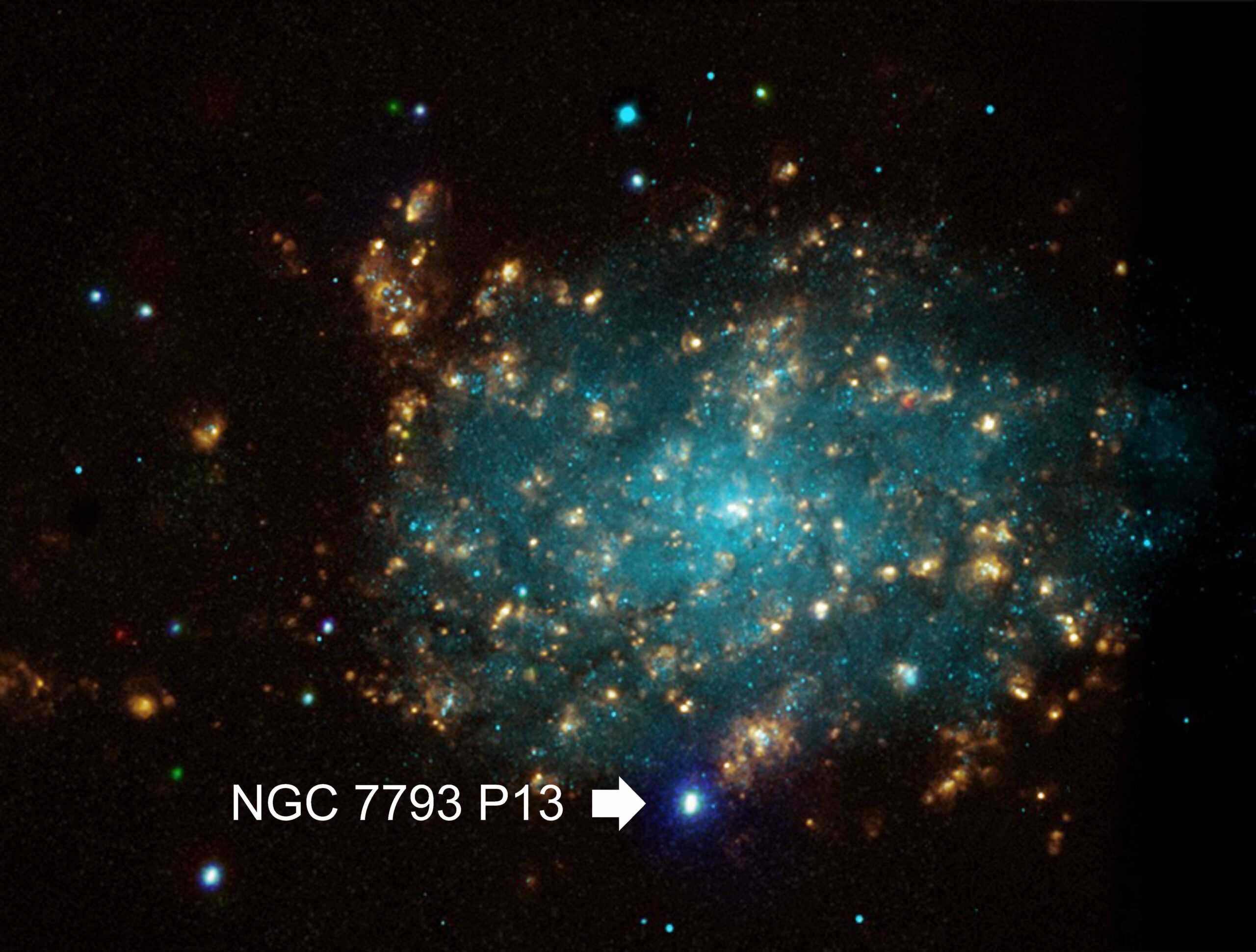
Figure 1_The galaxy NGC 7793 and NGC 7793 P13
The image that combines data from X-ray, optical, and Hα line observations. NGC 7793 P13 is located away from the galactic center of NGC 7793.
credit : X-ray(NASA/CXC/Univ of Strasbourg/M.Pakull et al); Optical(ESO/VLT/Univ of Strasbourg/M.Pakull et al);H-alpha(NOAO/AURA/NSF/CTIO 1.5m)
Usage Restriction : copyright notice must remain visible -
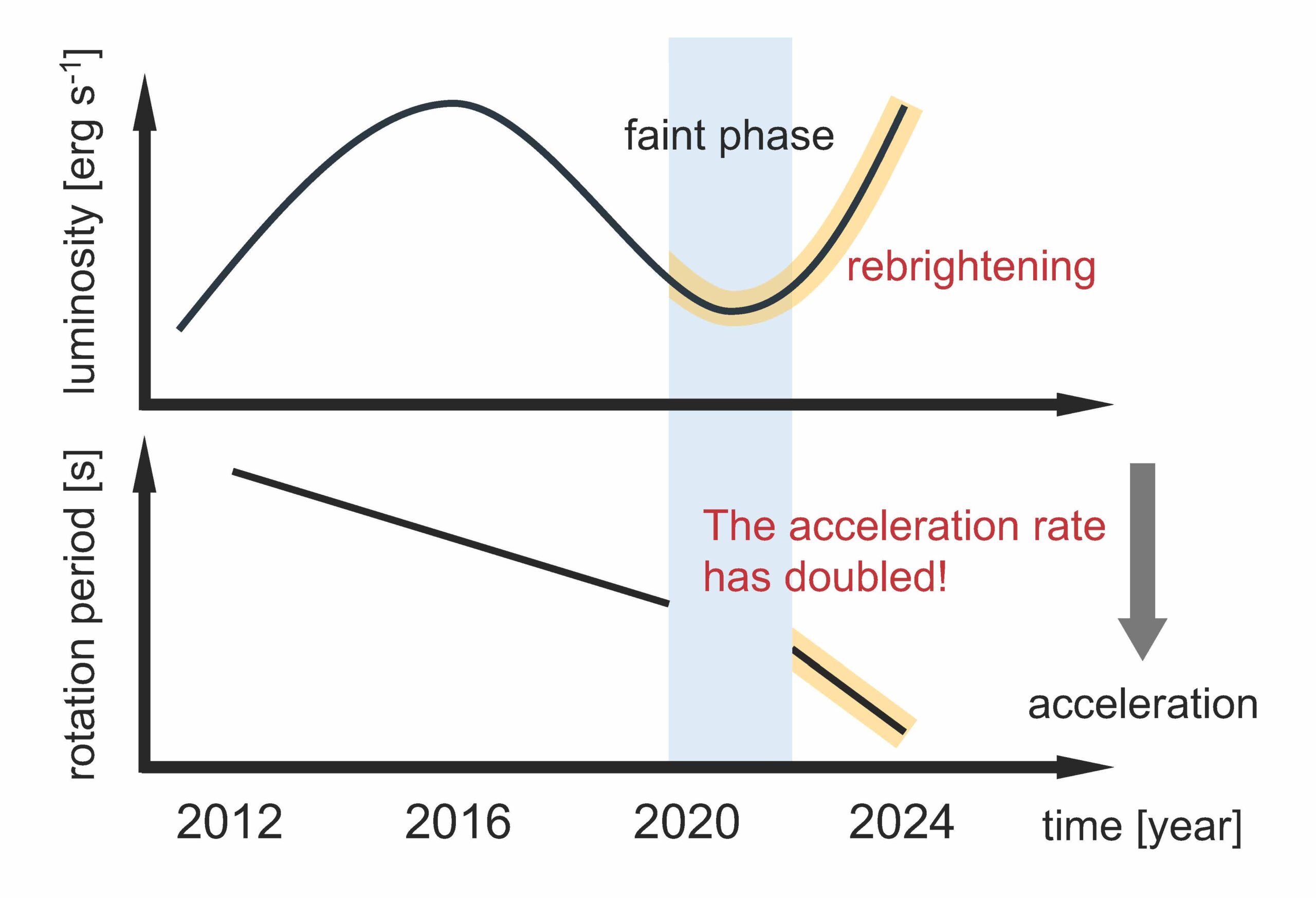
Figure 2_Evolution of the X-ray luminosity and rotation period
The luminosity and rotation speed changed significantly. There is an inverse relationship between rotational speed and period; a shorter period indicates faster rotation. The acceleration rate of rotational speed is represented by the slope.
credit : Marina Yoshimoto(Ehime University)
Usage Restriction : copyright notice must remain visible -
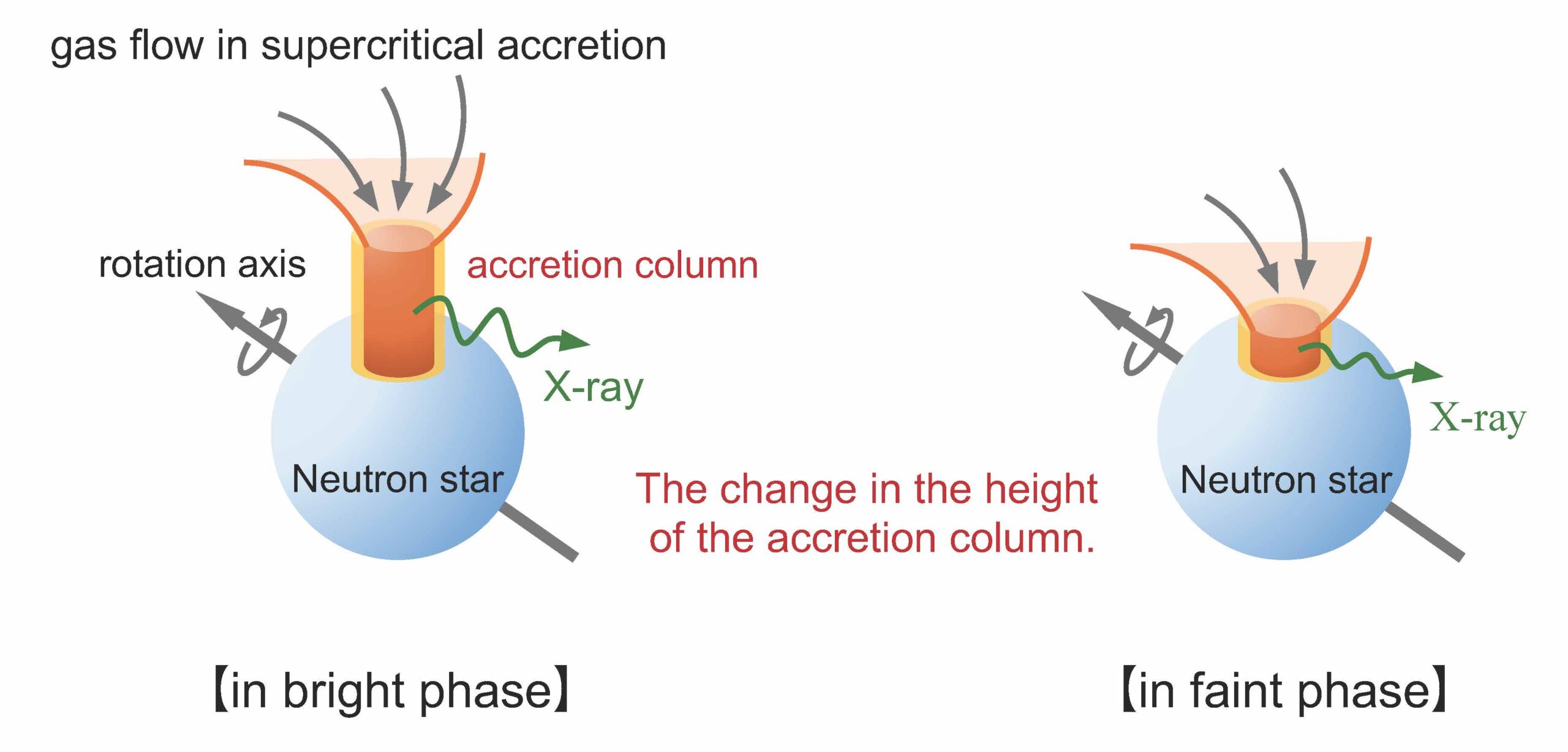
Figure 3_Changes in the height of the accretion column corresponding to variations in luminosity
During the bright phase, the accretion column is tall, while during the faint phase, it becomes shorter.
credit : Marina Yoshimoto(Ehime University)
Usage Restriction : copyright notice must remain visible
Contact Person
Name : Marina Yoshimoto
Phone : +81 89-927-9551
E-mail : yoshimoto.marina.gr@ehime-u.ac.jp
Affiliation : Postdoctoral researcher