
Deep earthquakes triggered by the olivine-poirierite transition

Seismicity decreases with depth, though it turns to increase in the mantle transition zone. It has been believed that pressure-induced phase transitions of olivine are the cause of high seismicity in the mantle transition zone. We experimentally showed that a diffusionless phase transition of olivine to poirierite triggers faulting. Our findings provide a natural explanation for the cause of high seismicity in the strongly deformed areas of ‘cold’ deep subducted slabs.
Seismicity decreases with depth because elevated confining pressure prevents frictional sliding of faults. However, seismicity tends to increase with depth in the mantle transition zone (depths of 410−600km). It has been believed that pressure-induced phase transitions of olivine in the ‘cold’ subducted slabs is the cause of high seismicity in the mantle transition zone.
The mechanism of deep earthquake has been studied for four decades. It has been considered that the pressure-induced phase transition of olivine induces shear localization to spinel-filled lens, followed by a deep earthquake. This ‘transformational faulting’ model has been experimentally tested by researchers using germanite olivine or mantle olivine. However, the olivine-ringwoodite transition is too sluggish to induce deep earthquakes in the cold core of the deep subducted slabs (600ºC), such as the Mariana slab, if we assume the diffusion-controlled nucleation of ringwoodite on olivine grain boundaries. A plausible explanation for the olivine-ringwoodite transition in the cold deep slabs may be the diffusionless pseudo-martensitic transition (i.e., shear transition) of olivine to ringwoodite. Recent studies showed that an intermediate structure of poirierite needs to be formed when the diffusionless shear transition of olivine-ringwoodite proceeds.
We conducted deformation experiments on metastable olivine under the pressure-temperature conditions of deep subducted slabs. We carefully observed the faulted olivine samples, which were obtained in our experiments, and we found poirierite grains in the fault gouge. The observed crystallographic orientations of poirierite and olivine grains are consistent with a theoretical model. The poirierite grains transform to ringwoodite as a result of shear deformation. Release of quite high latent heat via the poirierite-ringwoodite transition can induce a significant weakening of the fault gouge, without the aid of grain-size-sensitive creep, resulting in the occurrence of faulting. The diffusionless phase transition of olivine to ringwoodite via poirierite is effective not only at high temperatures but at low temperatures. Our findings provide a natural explanation for the cause of high seismicity in the strongly deformed areas of ‘cold’ deep subducted slabs.
Bibliographic Information
Faulting triggered by a quasi-diffusionless shear transition of olivine in deep subducted slabs.
Matsuda, K., Ohuchi, T., Inoue, S, Higo, Y., Tsujino, N., Kakizawa, S., Sakai, T.
(2026) Sci. Adv.
doi 10.1126/sciadv.adu5158
Fundings
- Japan Society for the Promotion of Science (JSPS) KAKENHI 23H00147, 25KJ1894
- Fukada grant-in-aid
- Seko Memorial Foundation
Media
-
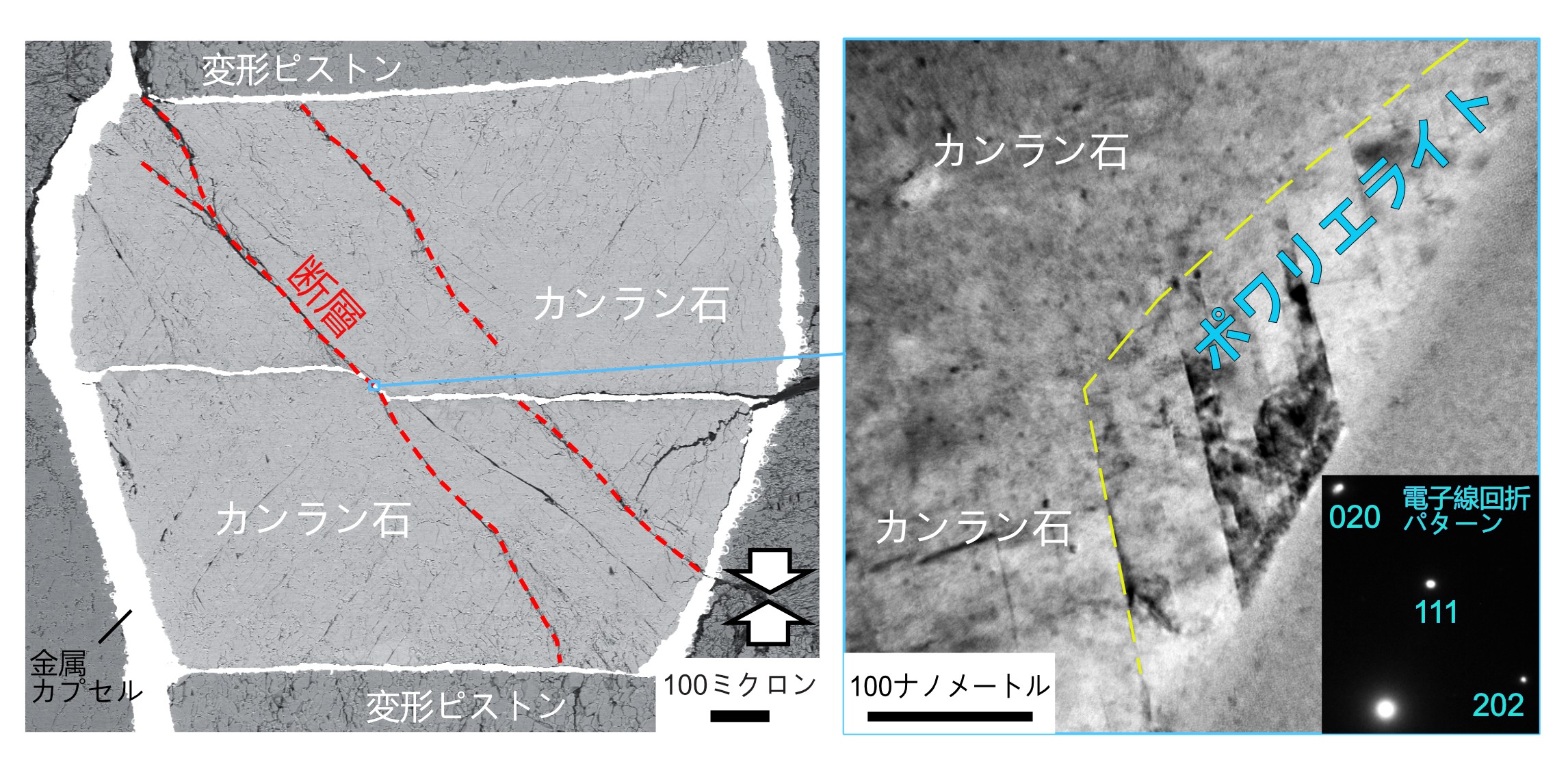
Fig. 1. Faults in the olivine sample deformed at 15.4 GPa and 850 ℃.
Left: Recovered sample. Red dashed lines represent faults developed in the sample. Right: poirierite grains formed in a deformed olivine crystal.
credit : Tomohiro Ohuchi
Usage Restriction : 使用許可を得てください -
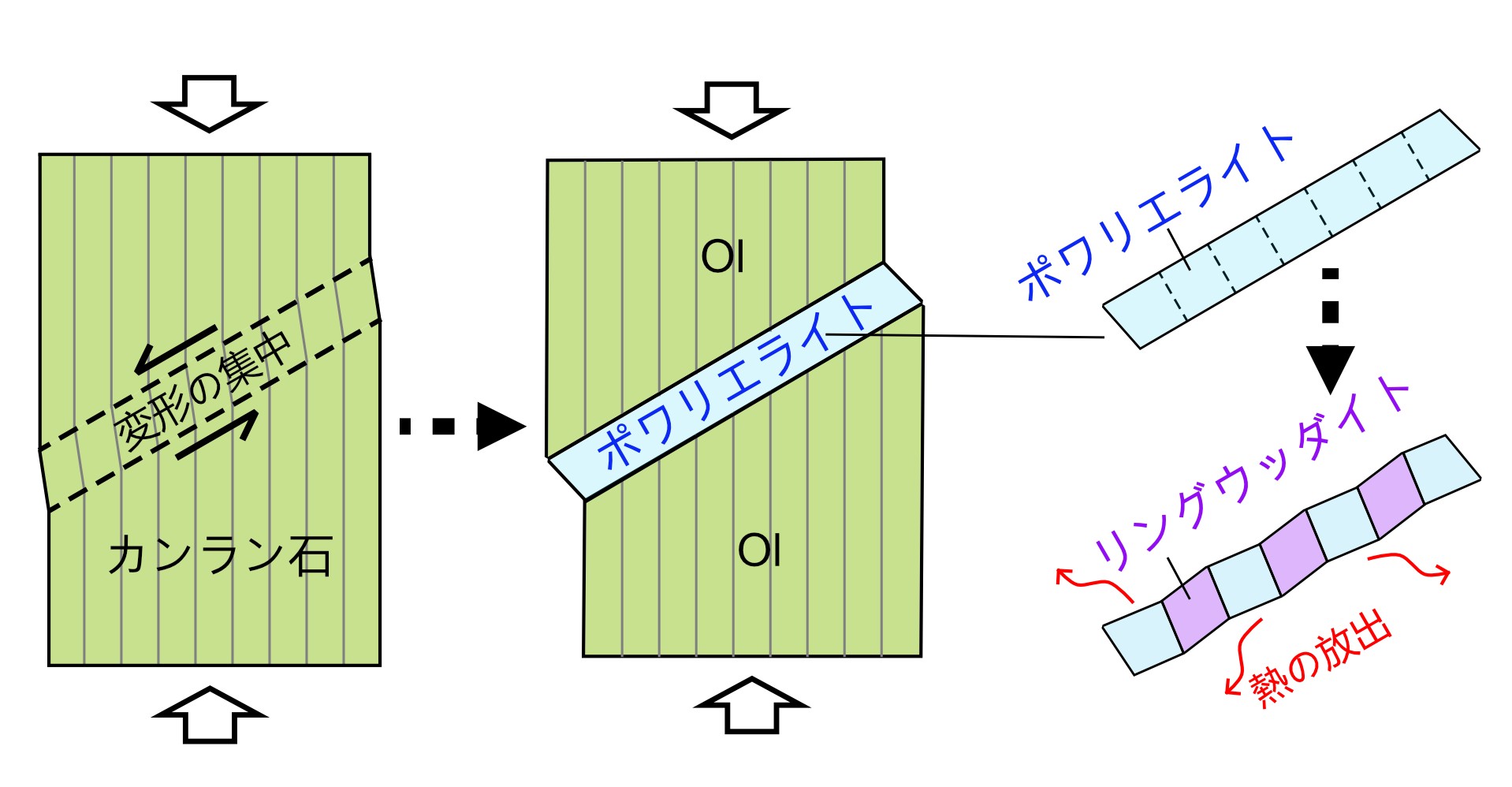
Fig. 2. Process of a shear transition of olivine to ringwoodite via poirierite.
Left and center: kinking (i.e., shear deformation) of an olivine crystal at pressures greater than 15 GPa results in the formation of a poirierite crystal. Right: Further shear transition of poirierite to ringwoodite associates a significant latent heat release, resulting in faulting.
credit : Tomohiro Ohuchi
Usage Restriction : 使用許可を得てください -
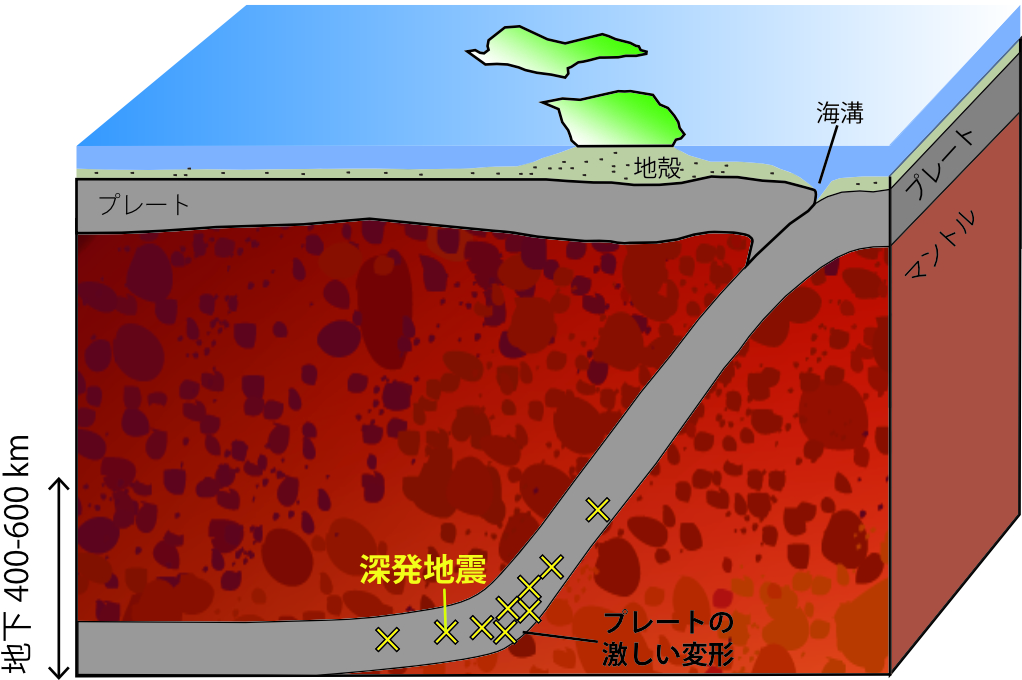
Fig. 3. Deep earthquakes in the subducted slab.
Seismicity is high in the strongly deformed areas in the deep subducted slabs. Our model (i.e,. shear transition of olivine to ringwoodite via poirierite) provides a natural explanation for the cause of high seismicity in the strongly deformed areas of deep subducted slabs.
credit : Tomohiro Ohuchi
Usage Restriction : 使用許可を得てください
Contact Person
Name : Tomohiro Ohuchi
Phone : 089-927-8159
E-mail : ohuchi.tomohiro.mc@ehime-u.ac.jp
Affiliation : Geodynamics Research Center, Ehime University